Pair of watercolours
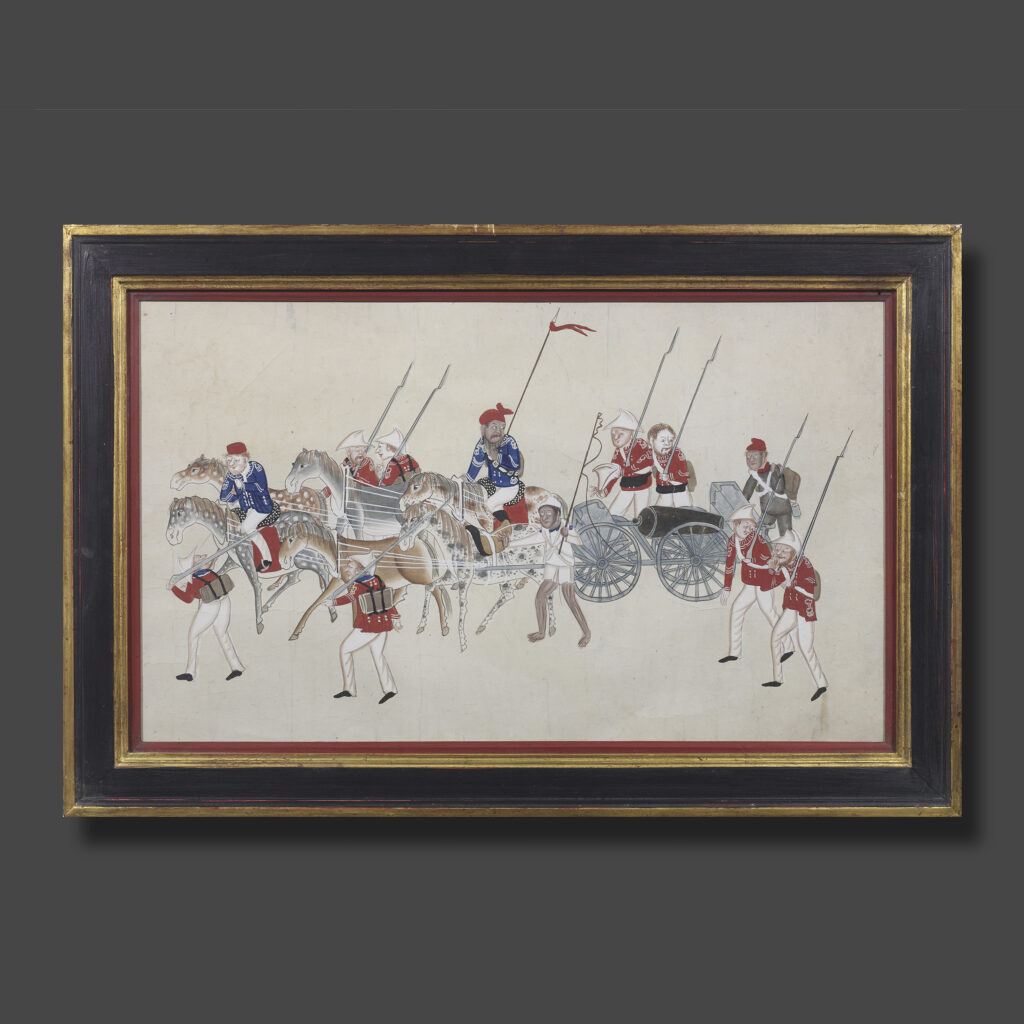
A large pair of watercolours, on paper, depicting caricatures of Sepoys, and British infantry, forming a marching band surrounding a mounted officer, the second troop sporting red uniforms, mounted on piebald horses and pulling a large canon. This amusing group is certainly by a Chinese hand .
Agate Lion
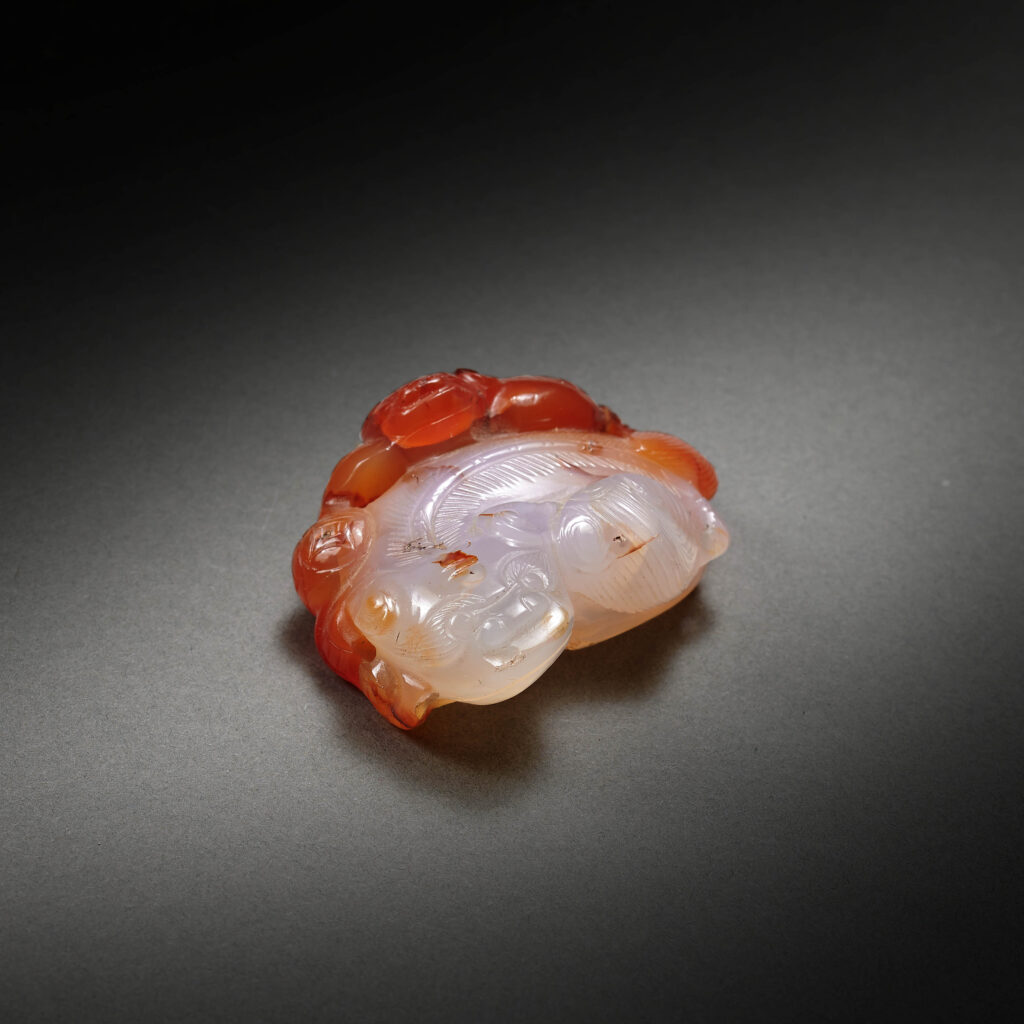
A well carved model of recumbent lion and her cub. The cub holding a brocade ball. With overall good use of the stone.
Five Shanghai 1930’s Photographs
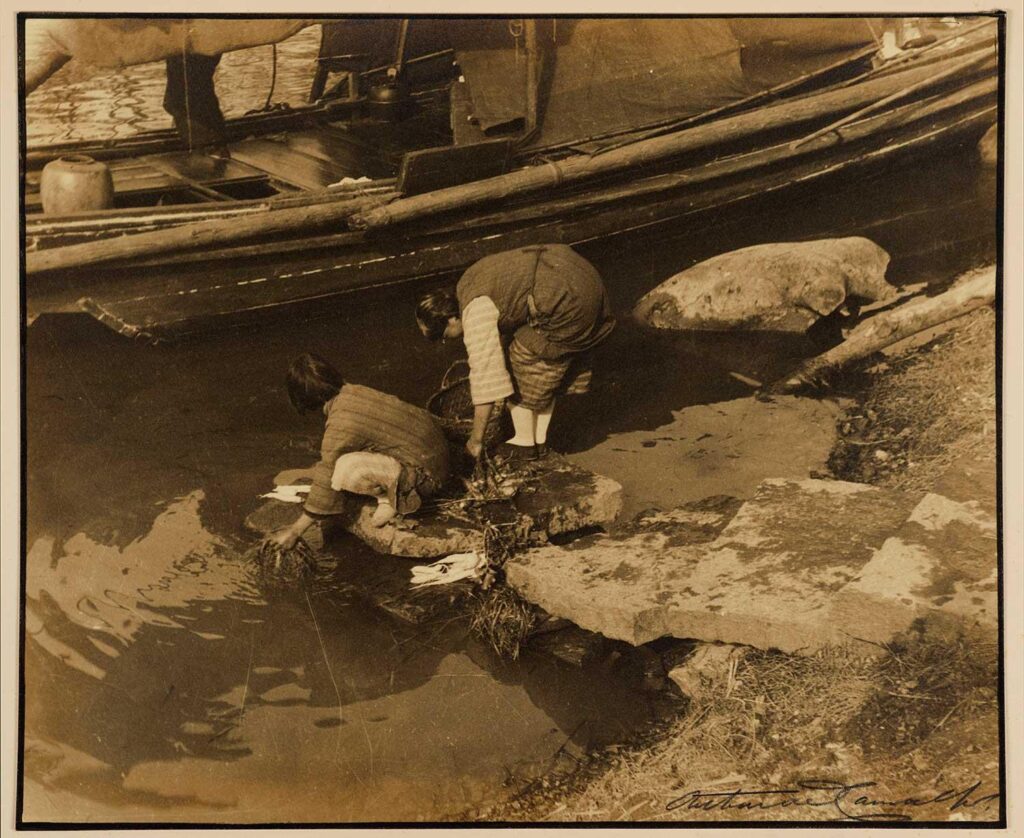
A group of five large photographs by Dr. Arthur de Carvalho, an amateur photographer living in Shanghai in the 1930’s. Sensitively observed compositions that are individually signed to the bottom left.
Pair of K’ang Bed Supports
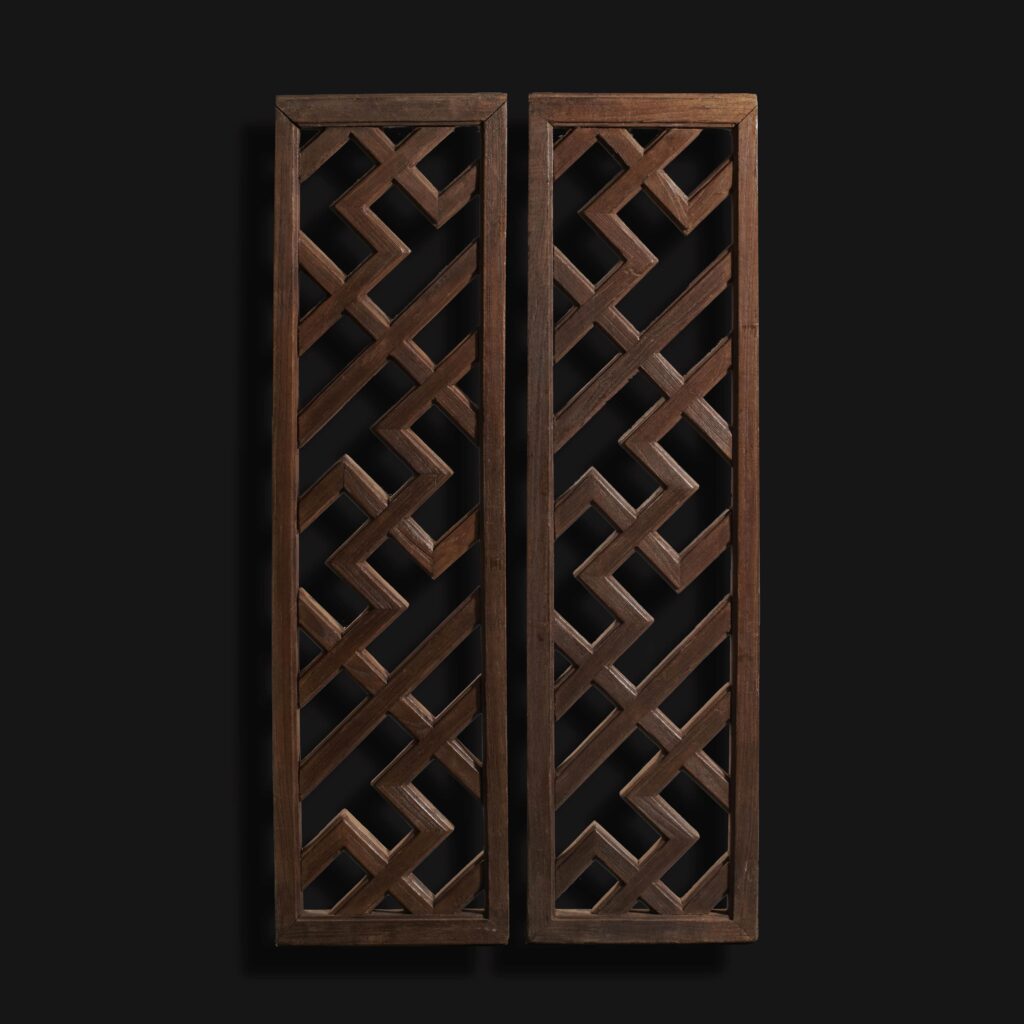
A good pair of carved wood panels with repeated Wan character design. Likely to be side arms from a Ming period K’ang bed.
Scholar’s Item Dish
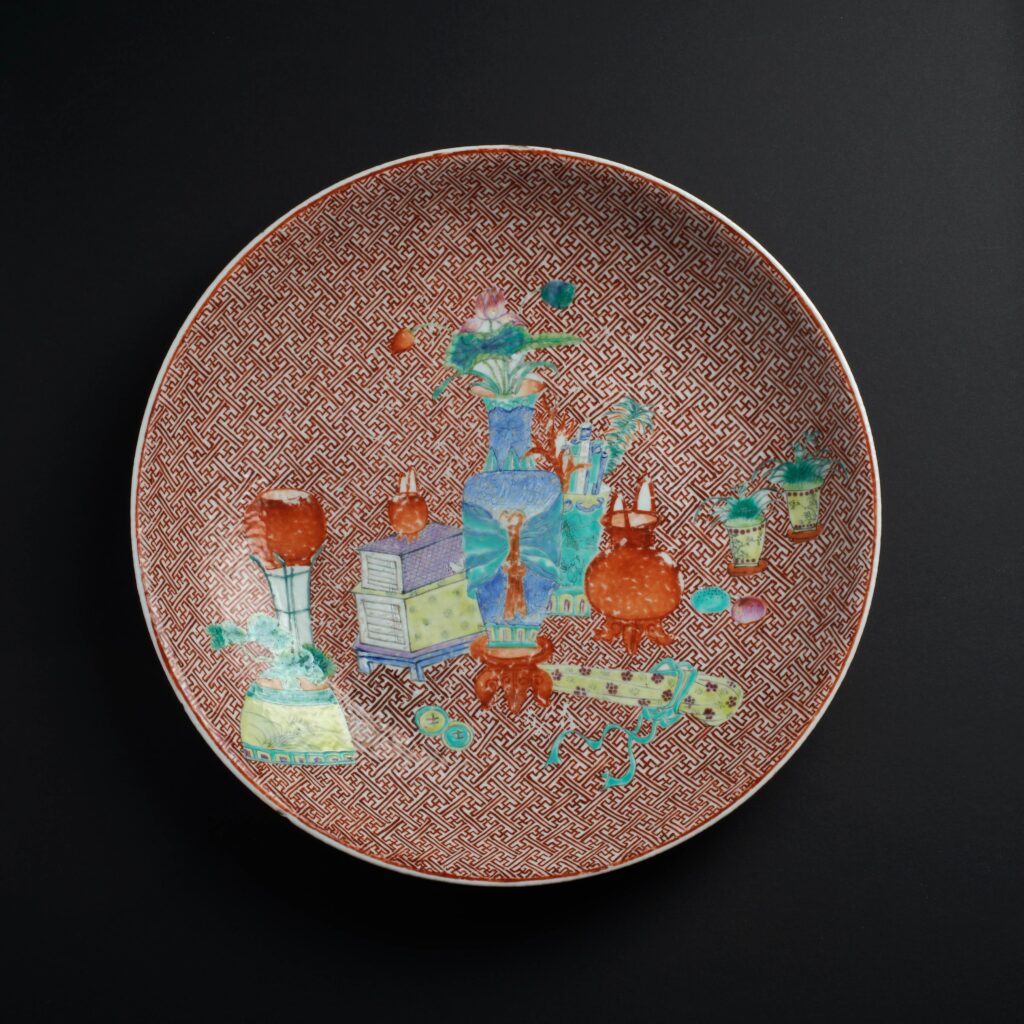
An unusual “Famille–rose” porcelain charger, decorated with precious objects against a red diaper ground. Apocryphal six-character Qianlong mark in iron red.
Five Fan Cases
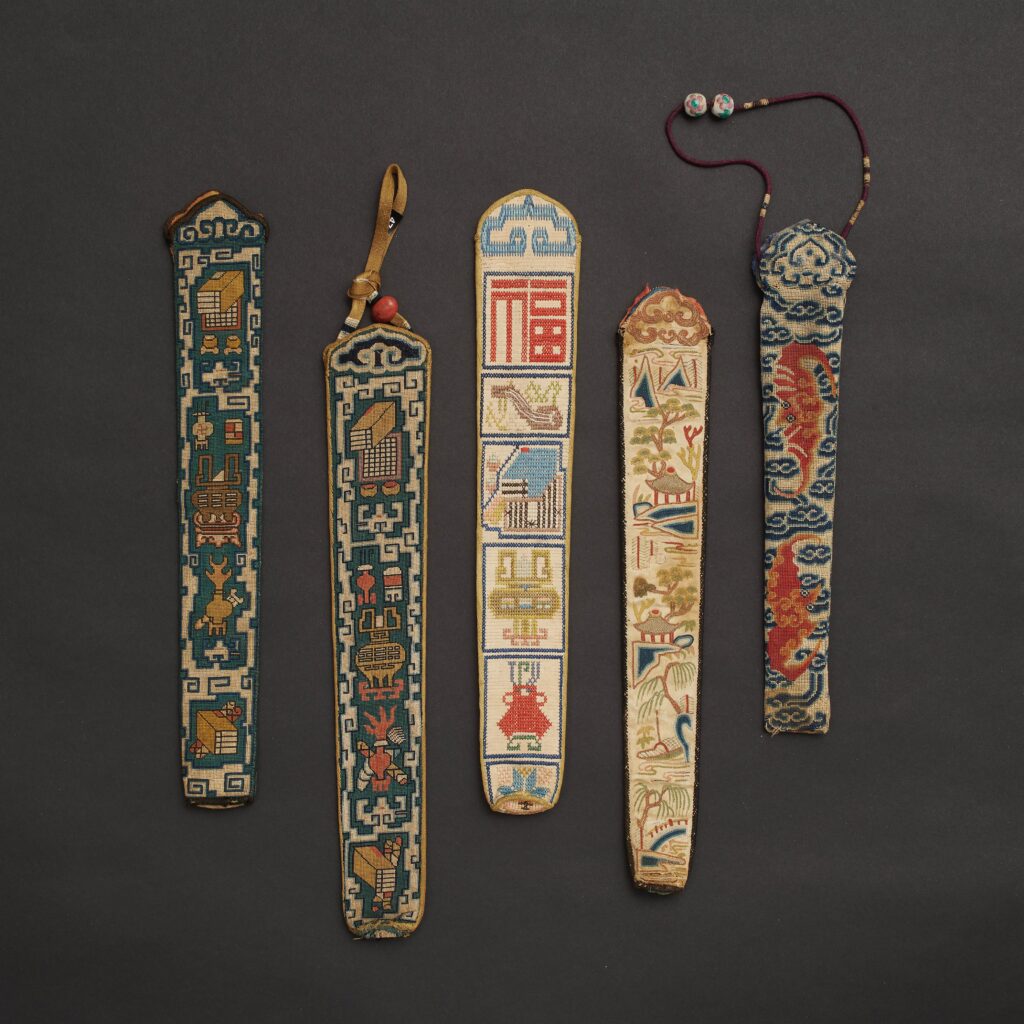
A finely embroidered collection of fan cases. A pair with needlepoint depicting stylised antique vessels and scholars items, a single with bats among clouds, a Beijing knot example (embroidered both sides) and a rare single with well embroidered incense burners.
Large Yellow Vase
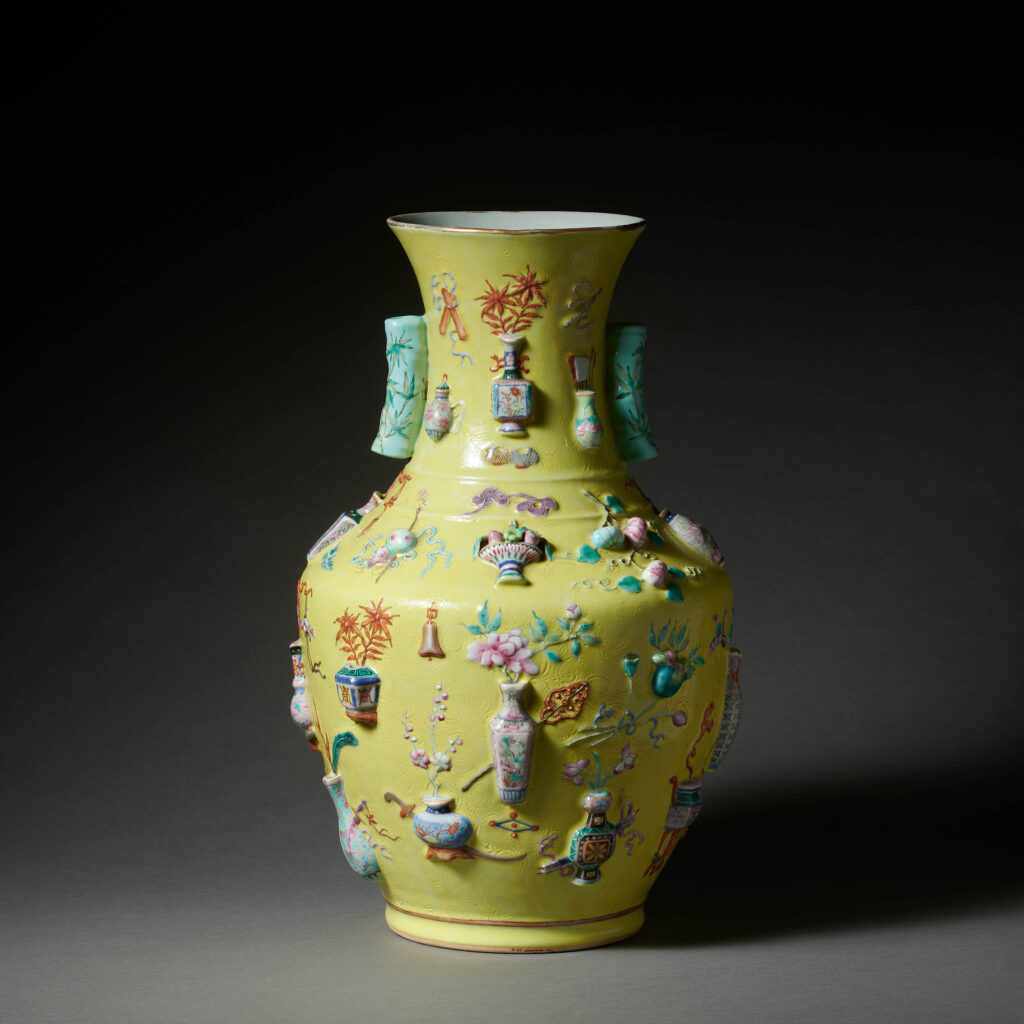
‘A famille rose’ yellow ground baluster vase, decorated in moulded relief with the ‘100 Antiques’ design, comprising censors, vases and fruit on an incised ground painted with bats and precious objects, with bamboo-style handles.
Chinese Skirt
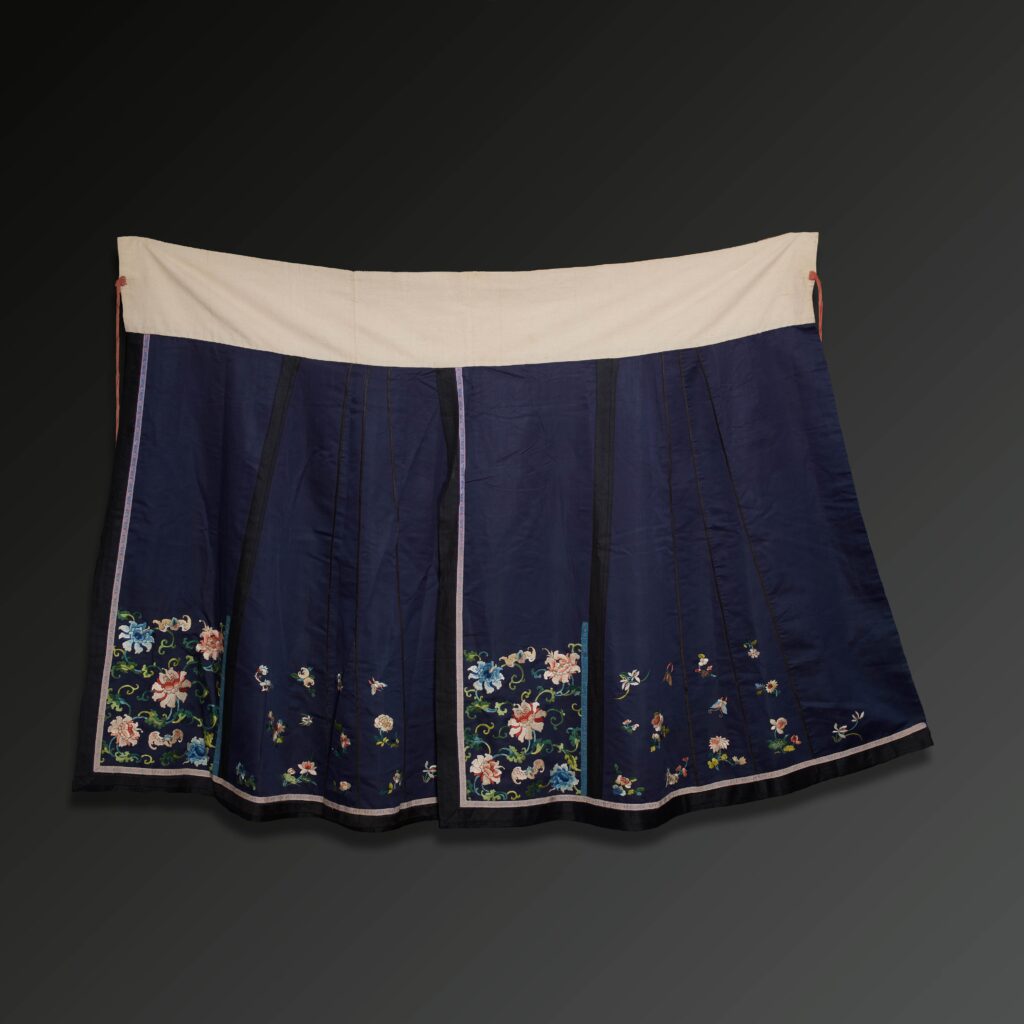
A good dark blue ground silk skirt, well embroidered with stylised chrysanthemums, surrounded with bats butterflies and further sprigs of spring flowers.
Bronze Censor
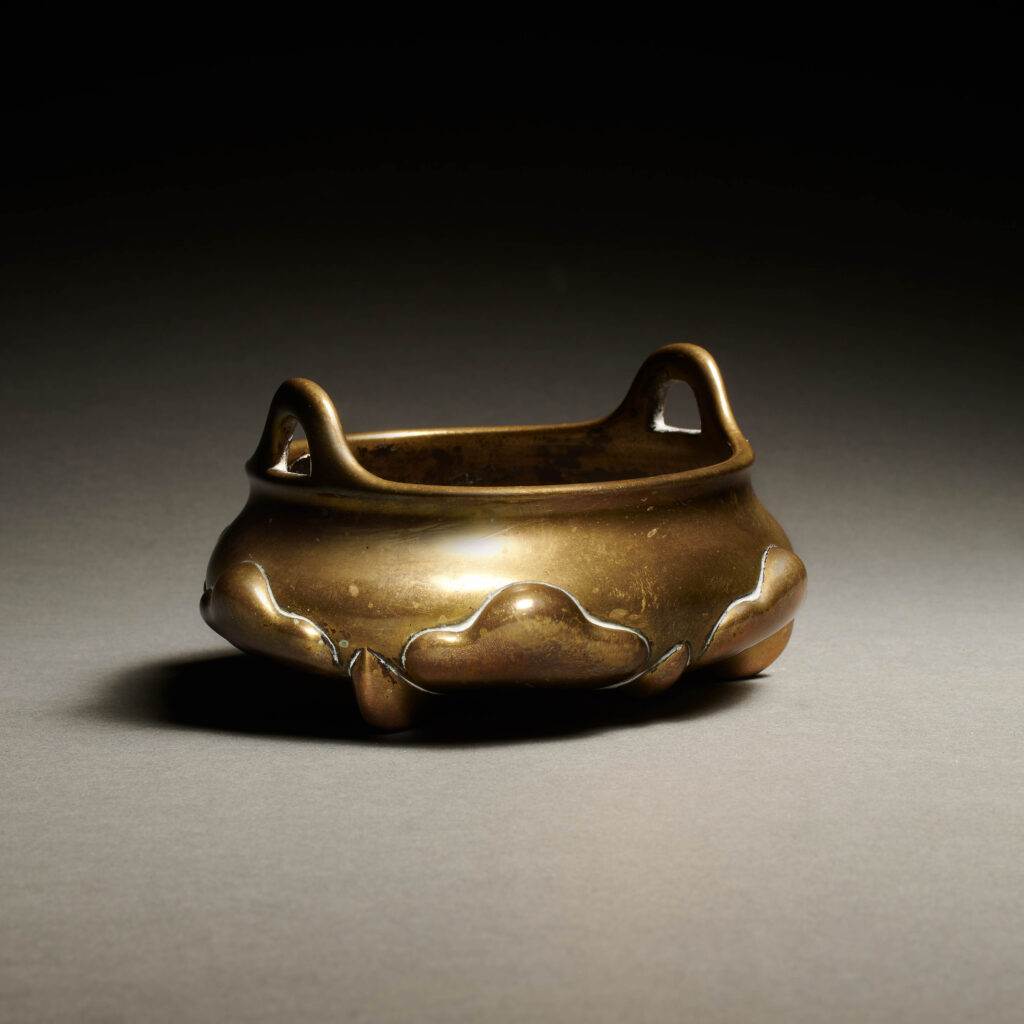
An unusual and well-formed incense burner, the base designed with six lappets, supported on six feet, with cast Ming mark.
Peacock Panels
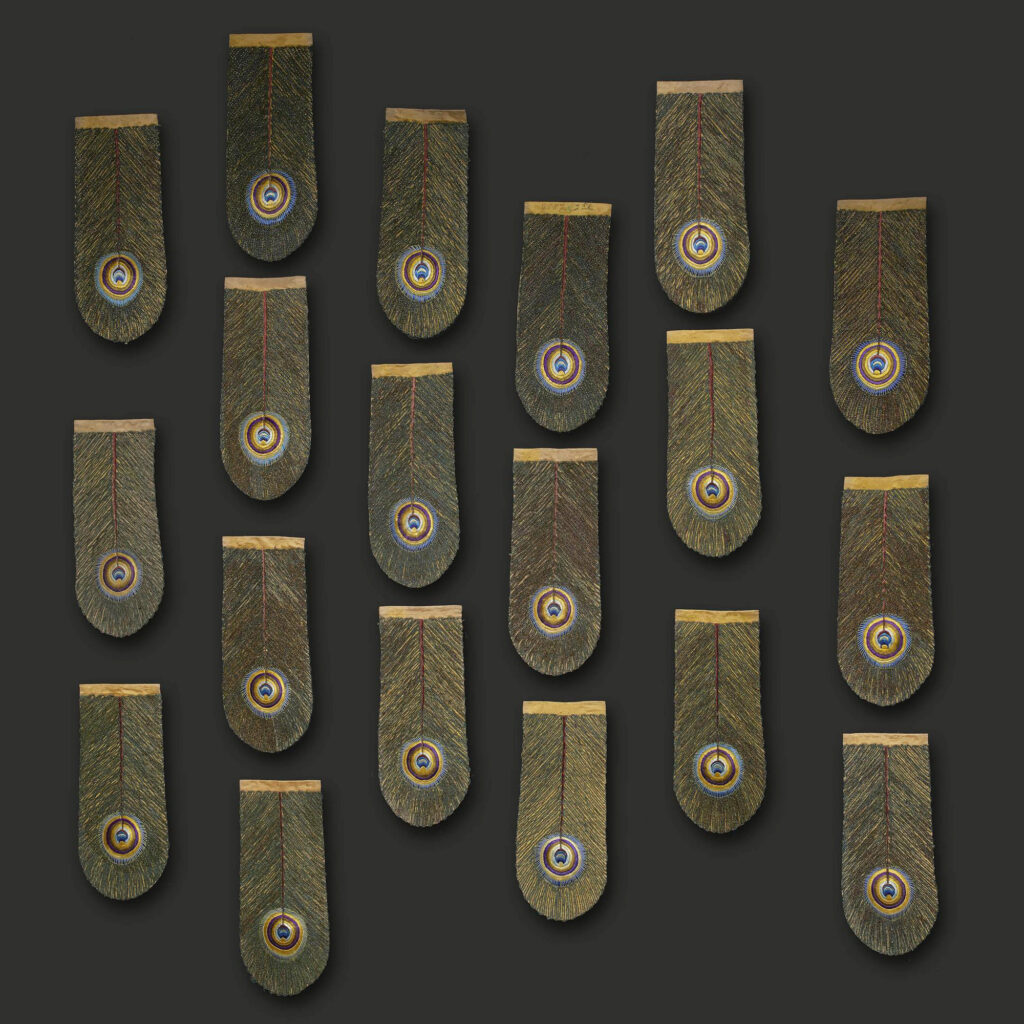
A group of nineteen lappets exquisitely worked in silk representing a peacock with central yellow and purple eye. The ground lavishly embroidered with peacock feather twisted threads and backed with imperial yellow lining. The shaped panels possibly used as replacements for a cape thought to have been in the Forbidden City.